


Maybe it’s time for employers to look at their side of the employee engagement equation.
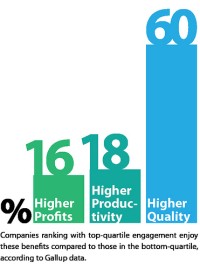
Employee engagement is a term I see quite a bit now. Studies suggest that engaged employees boost company profitability, so there are many suggestions about how leaders and managers can develop programs to increase employee engagement. The hope is that they can keep their top performers, the people they think are responsible for making them the most money.
All the employee engagement programs in the world will do no good if employees feel disposable.
Disposable is a feeling that I’m hearing about from many people who are seeking work. There’s a strong perception that employers are not loyal to their employees. The previous contract between employers and employees – that there was mutual loyalty – broke down decades ago. I think the focus on employee engagement ignores that elephant in the room – that employers no longer have anything to give their employees in return for their full engagement.
Loyalty to employees was replaced by loyalty to the bottom line and shareholder value. Employees know that, and many have responded by becoming “free agents” in the workplace, going where they will be treated and compensated well and valued for at least a time. They’ll be engaged in their work as long as they perceive that they will benefit in terms of gaining skills, being paid, moving up, and having the impact they want to have.
I’m not sure it’s possible to really engage employees these days, because in the back of everyone’s mind is the possibility that they too will lose their job one day. The people in charge don’t have their backs. I believe people are engaged in their jobs to the extent they gain personal benefit, not because of what it means to the company – even non-profits.
I work with many people who have lost their jobs due to downsizing, layoffs, change in management, restructuring, political maneuvers, mergers, shrinking sales or charitable donations, and all the other myriad business reasons for cutting someone from their job. Sometimes a person is even let go because their skills didn’t match what the job needed. In my experience, that’s pretty rare, though.
In a way, being let go because you did a bad job is better for everyone because then there seems to be a good reason for losing your job. When it’s political or because some higher up made a poor decision, it makes less sense and appears arbitrary.
Today, it’s hard to imagine employees being willing to devote their hearts and minds to their employer – the definition of an engaged employee. So many have seen the devastation of being fired or “downsized” that they may guard those hearts and minds and devote only so much to the employer in order to protect themselves.
I do believe there are ways employers can build trust with workers and allow them to engage more fully. The fundamental challenge is whether employers are prepared to commit to someone once they’ve hired him or her – commit to train them, commit to develop them, commit to honesty about financial conditions, commit to sharing the burden when times are hard. In return for that commitment, employees will commit to their work. That kind of commitment is all too rare.


