


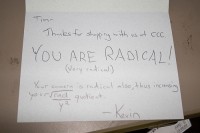
Last night, I led a workshop for women (and 1 man) who are looking for their “right fit” job. The discussion yielded solid consensus on one thing: there is not too much acknowledgement and appreciation in the workplace today.
Around the room, I heard people feel under-appreciated – for their efforts, results, talent, and contributions. Some people called it working for a micro-manager who appeared not to trust their judgment and competency. Others said they worked for a psycho who criticized them constantly. A few talked about “imposter syndrome,” an actual psychological condition where you feel people will find out you aren’t really that talented or able and thus will be booted out of your job. And others had a hard time owning their accomplishments and skills during the exercises I led them through. Tooting one’s own horn is frowned upon.
Clearly, these people work in organizations that mirror our culture of finding and calling out mistakes, errors, lapses, omissions, typos, and failures. I find it sad.
VALUE OF APPRECIATION
Management and leadership experts have for years noted the importance of appreciating people. While Executive Director of an anti-hunger non-profit, I posted on my office bulletin board “Catch someone doing something right” as a reminder to tell my staff that they’d done a great job with something specific (thanks to Kenneth Blanchard and & Spencer Johnson). I had to post it because it didn’t come naturally to me. Over time, I did it more and more, as did the other leaders in my organization. And we had a pretty high morale. Most people enjoyed working there, we had low turnover and great results. For example, over 10 years, we increased by 900% the number of people we helped feed every week.
I learned that it wasn’t enough to tell someone “great job!” Context was important. I needed to say “I really loved the way you worded that invitation” or “Way to turn that food donor around!” It showed that I paid attention to what and how they did something. That engendered trust in my sincerity, because I got the details right. I really noticed the person, not just the thing done.
At my non-profit, we built appreciation into our monthly all-staff meetings, by creating a few recognition categories. One of the most meaningful was the Roll Model award, where someone recognized a peer of theirs for going above and beyond to help them out. The person had to be specific about what the person did, and it was the source of great emotion at these meetings. Over time, we had 3 and 4 people each meeting giving Roll Model awards (accompanied by gift certificates to a bakery where they could get a roll…). Clearly appreciation was, well, appreciated.
You can lead yourself by appreciating your own talents, skills and accomplishments. Then lead others by appreciating them.
APPRECIATION AND GRATITUDE
Some people equate appreciation with gratitude. I think they are different. Gratitude is something I feel when I appreciate someone, while my appreciating someone may make them feel good about themselves. I have gratitude for that person, and when I express it to them, that is appreciation.
Appreciation creates a human connection between people. When I compliment someone on their smile, or thank a customer service person for answering my questions so well, I feel better and I think they do. Usually they are surprised, for appreciation is so rare. Yet I think we all know it is part of the glue that keeps families and communities together.
Appreciation is a powerful tool for building a trust relationship. Trust is so important in any work situation, because we rely on each other to back us up, help us out, complement our skills, share our passion, and fulfill our respective responsibilities. A little appreciation can help people built trust, and go that extra mile again and again. Reciprocal appreciation is really powerful – it’s like rocket fuel for positive relationships.
RESOURCES
These are some resources articulating the business benefits of appreciation.
http://www.appreciationatwork.com/app/uploads/2014/01/Crown-Ministries-June-2012.pdf


